
On Becoming a Respected Dog Breeder
An Educational Guide for Aspiring Irish Wolfhound Breeders
Author: Laurie E. Rutherford
Date: Original written in 2003. Updated December 2026 by the author.
Purpose of this guide
This article is designed as an educational resource for the Club’s website. It introduces aspiring and novice breeders to the responsibilities, knowledge, and ethical standards required to become a respected breeder of Irish Wolfhounds.
Key Takeaways for New Breeders
Aligned with the Irish Wolfhound Club of Canada (IWCC) Code of Ethics
• Responsibility to the breed – Breeding is a privilege, not a right. Every decision must prioritize the long-term welfare, health, and preservation of the Irish Wolfhound.
• Commitment to knowledge and education – Ethical breeding requires continual learning, including canine anatomy, the breed standard, and the historical purpose of the Irish Wolfhound.
• Respect for mentorship and experience – Ethical breeders seek guidance from knowledgeable, respected mentors and value consistency, integrity, and objectivity.
• Thoughtful and transparent breeding practices – Every breeding must be carefully planned using the pedigree as a blueprint, with full disclosure of health history—both positive and negative.
• Accountability for every dog bred – Breeders are responsible for every puppy they produce throughout its lifetime and must act honestly and ethically in all placements.
• Preservation over personal preference – Breeding decisions must be guided by the breed standard and function, not personal taste or convenience.
• Improvement and protection of the breed – The ethical breeder strives to improve the breed with each generation and, at minimum, ensures that no harm is done.
— If you cannot make the breed better, your responsibility is to ensure you do not harm it.
Breeders of purebred dogs have a serious responsibility to their breed. They make a lasting contribution to the breed’s gene pool—one that will influence generations to come. Breeding dogs is a privilege, not a means of making money. As McBryde (1998) notes, the purebred Irish Wolfhound is the result of the care and dedication of many people over hundreds of years. She writes that “they have supervised the conception and birth of every single generation—people who have made sure that the right bitch was mated to the right dog and then reared puppies to healthy adulthood” (p. 184).
Understanding the Types of Breeders
Craige (1997) describes three types of dog breeders: the beginner, the competent breeder, and the master breeder.
- Beginner breeder – Typically has modest goals, such as experiencing the breeding of a litter or showing a puppy to its championship.
- Competent breeder – Described as the “nuts and bolts of the fancy.” This breeder wants their dogs to be competitive under both breeder judges and all-breed judges. They strive to understand the difference between an average dog, a good dog, and a great one, and in doing so contribute to the overall improvement of the breed.
- Master breeder – The expert who not only produces outstanding dogs for themselves, but also produces dogs that others in the breed can use for the good of all. Craige states that “the master breeder produces the big specialty winners, dogs in the Top Ten, and those that go on to make producing records as well as show records. The master breeder is totally committed and objective, working toward the ultimate responsibility of breeding better dogs” (p. 11).
Building Foundational Knowledge
To become a respected breeder, Craige emphasizes the importance of understanding what makes a good dog good. This knowledge allows the breeder to recognize soundness and correct construction in any breed and requires a basic understanding of canine anatomy.
Breed-specific knowledge is equally essential. This includes studying the history and original purpose of the Irish Wolfhound and understanding why the breed was developed. As Craige states, “It is absolutely mandatory to know the difference” (p. 6). For the Irish Wolfhound, the guiding principle must always be that form follows function.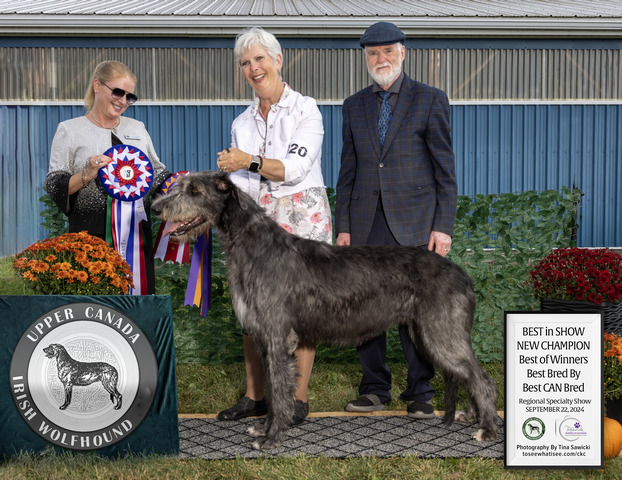
Education Through Study and Experience
Knowledge can be obtained from many sources. Numerous books written by master breeders are available and typically include the breed standard, interpretations of that standard, and valuable historical insight. However, hands-on experience is essential to applying what is learned.
Beginner breeders should attend breed shows and specialties whenever possible and engage in conversations with breeders who are actively exhibiting their dogs. Moving beyond one’s local area to observe competent and master breeders is strongly encouraged.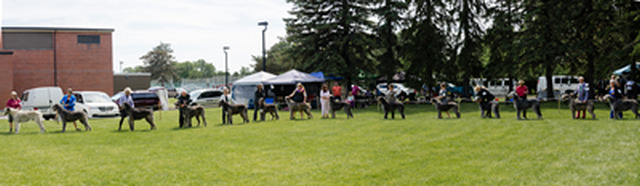
Specialties often include seminars that teach and demonstrate key points of the breed standard.
Wolfhound Beginners are encourage clubs both domestically and national to access educational articles, show results, and photographs of Irish Wolfhounds from around the world.
In Canada, beginners are encouraged to join the Irish Wolfhound Club of Canada (IWCC). First-year membership is free and includes access to the Clubistry website at www.iwcc.ca . The site provides resources related to the breed standard, the Club’s Code of Ethics, and the Breeders List, along with guidance on preparing for conversations with breeders.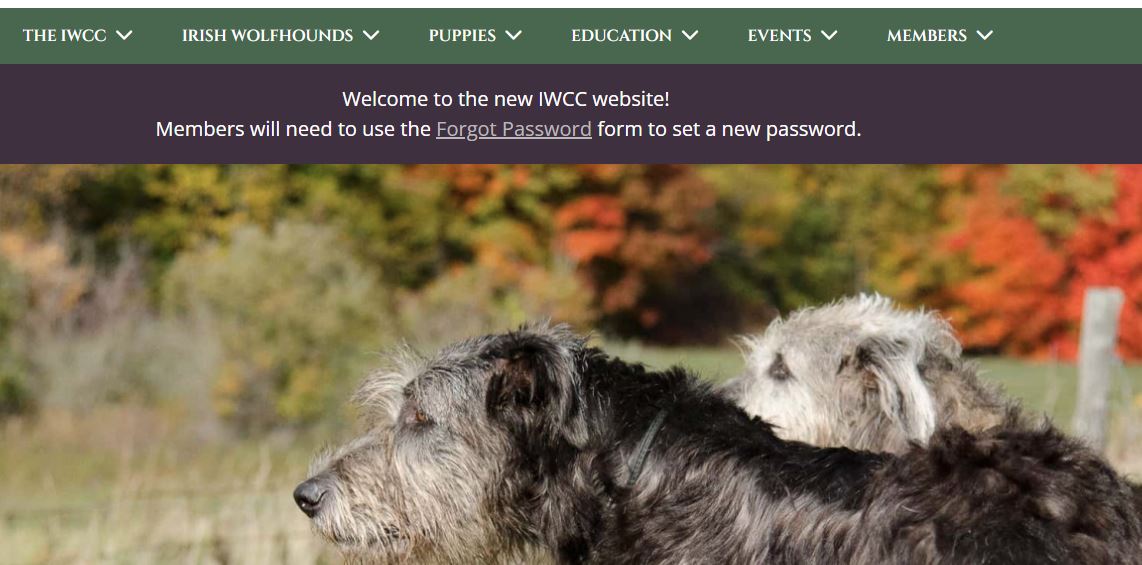
Additional learning opportunities include online discussion groups, Irish Wolfhound–specific resources, and the websites of competent breeders worldwide. Through this process, many beginners identify someone they would like to ask to become a mentor.
When choosing a mentor, Craige advises breeders to “follow your head over your heart” (p. 9). Questions should help assess a mentor’s competence, integrity, and influence. Consistency in a mentor’s breeding program is a strong indicator of objectivity and clarity of thinking.
Planning a Responsible Breeding Program
Thoughtful consideration must be given to every breeding plan. A breeder selects genes for a lifetime, and if one cannot improve the breed, the minimum responsibility is to avoid harming it. The pedigree serves as the breeder’s blueprint.
Using a mediocre bitch with the intention of “breeding up” leads to slow progress and is costly, time-consuming, and likely to produce mediocre offspring. Murphy (1994) advises, “Think well before you breed once. Set your standards high and breed to the standard. Don’t breed to a point that suits your fancy” (p. 220).
Each litter should represent an improvement over the last. While it may take years to raise a better puppy, it can take generations to correct the effects of breeding from a mediocre hound. .jpg)
Craige reminds breeders that “every dog the breeder brings into the world is that breeder’s personal responsibility. Accountability in all phases of the activity is the breeder’s creed” (p. 14). Selection decisions should be based on pedigree, conformation, performance, and complete health history—both positive and negative. Responsible breeders must be open and honest so informed decisions can be made in the best interest of the breed.
Ethics, Integrity, and Long-Term Impact
The selection of one’s first hound—or the choice of a mate for an existing hound—is ultimately the breeder’s responsibility. Objectivity develops through education, experience, and meaningful discussion with other dedicated fanciers.
Honesty and integrity at all levels of breeding, from beginners to master breeders, are essential. The decisions made today will shape the Irish Wolfhound of tomorrow and leave a lasting imprint on the breed for generations to come. 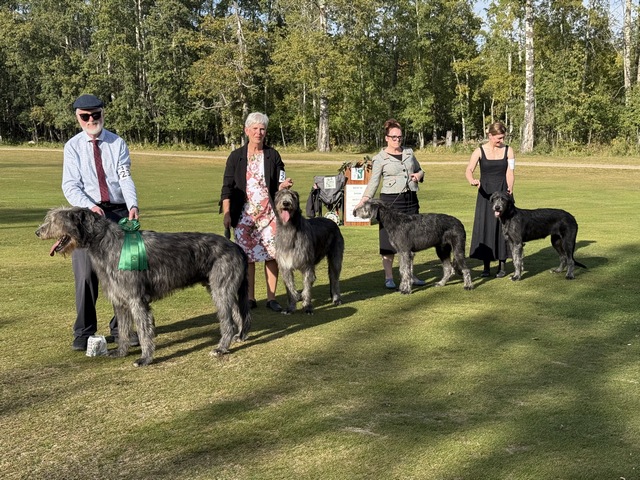
References
Craige, P. V. (1997). Born to Win. Chicago, IL: Doral Publishing.
McBryde, M. (1998). The Magnificent Irish Wolfhound. Gloucestershire, UK: Ringpress Books.
Murphy, E. C. (1994). Raising, Showing, Breeding the Irish Wolfhound (3rd ed.). Dublin, Ireland: